Respect: Ethical & Cultural

Respect is an ambiguous word.  The various ways people interpret, give and expect respect all contribute to an environment of harmony, chaos, and everything in between.  Understanding and properly applying the differences between ethical and cultural respect should help people achieve greater peace and harmony.

Ethical Respect—Ethics can be defined as a system of values which are deemed good and right by humankind.  Killing, stealing and lying to others are extreme examples of unethical disrespect.  Being kind, courteous and truthful to others are examples of ethical respect.  Almost all people rightfully believe in treating others ethically and in expecting such in return.

Cultural Respect—Culture affects everyone.  Every day people interact with others who are, to some degree, culturally different.  The qualities, traditions and manners which are valued by each person can clash though.

  • The sarcasm of an American can disturb and hurt someone who doesn’t understand their humor
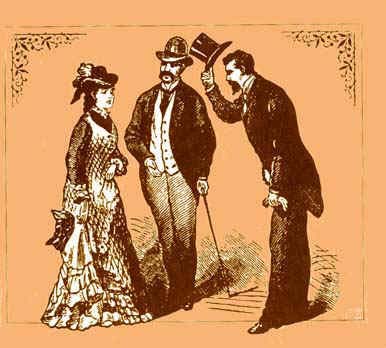
  • A lady might be offended if her date doesn’t open her doors for her
  • An Asian could be bothered by someone who walks around in their home with their shoes on
  • A religious member might be offended by the casual dress worn by another at church
  • Certain four-letter words might offend someone who isn’t accustomed to that culture’s language

There are two points of view to analyze when dealing with each of these scenarios; first is the perspective of the offended; the second is the perspective of the offender.

The offended, in this context, is someone who feels they are being disrespected solely due to an infringement of their own cultural expectation.  This is cultural entitlement mentality.  Is it just for a person to expect people from different cultures to conform to their own cultural preferences?  No.  Are they right by thinking they are a victim of disrespect just because someone thinks, speaks or acts differently than they’d prefer on a cultural level?  No.

The offender, on the other hand, is the person that, either knowingly or through ignorance, has infringed on someone’s cultural expectation.  If someone knowingly and unregretfully infringes on someone’s cultural expectation they have great cause to repent.  It is each person’s duty to learn or be aware of other people’s cultural expectations and reasonably abide by them.  By thus applying the golden rule- offense is minimized and peace/harmony abound.  The saying, “Give 100%, expect 0% and you’ll never be disappointed” is a fair and applicable promise when it comes to how someone treats others culturally.

Introspectively, should cultural respect be given?  Yes, within reason.  But should it be expected from others?  No.  On the other hand should ethical respect be given?  Yes, always.  Should it be expected from others?  Also yes.

Ethical Respect Cultural Respect
Given? Yes *Yes
Expected? Yes No

*Cultural respect should be given within reason  (For example, you might not compromise on your dietary code just to please someone else)

All too often a person feels they are entitled to what they call respect but they confuse the cultural for the ethical.  Understanding the distinction between culture and ethics is crucial when determining how one gives and expects respect in a just and honest way.

Voting: For LDS Dummies- The People’s Standard vs. The Lord’s

Qualifiers vs. Disqualifiers—There are many reasons people attempt to qualify or disqualify a candidate.  Many of those reasons are irrelevant and sometimes harmful, especially when compared to the standard the Lord set (D&C 98:5-11).  Some people might believe a candidate is qualified for office based on their political party while others might disqualify a person based their inability to speak eloquently.  Below is a list of reasons people (left column) and the Lord (right column) qualify or disqualify candidates.  Obviously we want to move away from the ridiculous and irrelevant reasons people (dis)qualify candidates and adopt the Lord’s reasons.

1 Sam 16:7 D&C 98:10
…for the Lord seeth not as man seeth; for man looketh on the outward appearance, but the Lord looketh on the heart. Wherefore, honest men and wise men should be sought for diligently, and good men and wise men ye should observe to uphold; otherwise whatsoever is less than these cometh of evil.
Reasons People Qualify or Disqualify Candidates: Reasons The Lord Qualifies or Disqualifies Candidates:
Personality Good
Rhetoric Honest
Eloquence Wise
Party Affiliation (whatsoever is less than these cometh of evil)
Gender
Age
Religion
Race
Occupation
Promises
Popularity
Appearance
Tradition
Endorsements

Good—Often we’ll learn of a candidate who is polite, outgoing or fun and we automatically like their personality.  We should be careful not to confuse our impression for their personality with their character though.  A person can have a “nice” personality but not have good character.  A person’s character is who the person truly is.  Finding out a person’s character requires more than a passive awareness of their outward words and actions.  It requires attention and focus to their inner core values.  It requires righteous judgment and the gift of discernment to learn a person’s character. Upright character is a necessary attribute in candidates we elect.  A person’s personality is irrelevant.  Also, just because a person shares the same religion as you doesn’t automatically make them good.

“Nevertheless, when the wicked rule the people mourn.” (D&C 98:9)

Honest—Sometimes it’s not easy to tell when a candidate is being honest and a lot of times people will cast their support for someone in hopes that they stay true to what they’ve promised.  All too often, especially in politics, people are let down.  The difficult question is how to determine when a candidate is telling the truth.  First of all, when a candidate continually repeats the same campaign rhetoric (language used to please and persuade) but has a weak history of being loyal to those espoused principles, they probably aren’t being honest.  Most candidates will have a record—political or otherwise.  It is the people’s duty to learn that record when determining if a candidate is an honest one.  The more consistent a candidate’s record is the more honest they have been.  Beware!  When a candidate changes the tone of their message based on who the majority of their audience is, this is a sign of dishonesty.

Wise—How each individual determines how wise a candidate is will depend on that individual’s personal values.  Latter-Day-Saints believe that morality and truth are not relative but are sure and lasting based on eternal law.  As they choose secular representatives they should choose those who represent them based on their ability to judge what is right and act accordingly.

People should take into account the context of D&C 98:10 when determining whether the candidate in question is truly wise.  In D&C 98:5-8 the Lord reveals to Joseph Smith:

“And that law of the land which is constitutional, supporting that principle of freedom in maintaining rights and privileges, belongs to all mankind, and is justifiable before me. Therefore, I, the Lord, justify you, and your brethren of my church, in befriending that law which is the constitutional law of the land; And as pertaining to law of man, whatsoever is more or less than this, cometh of evil. I, the Lord God, make you free, therefore ye are free indeed; and the law also maketh you free.”

A wise candidate is one who strictly adheres to the Constitution and supports principles of freedom.

Forsake Evil, Cleave Unto Good— When referring to the law of man the Lord said “whatsoever is more or less than this (the United States Constitution), cometh of evil”.  It’s clear that any deviation from the Constitution is against the Lord’s will.  When referring to whom we should seek for secular office the Lord stated, “whatsoever is less than these (a good, honest and wise representative) cometh of evil.”  It’s clear that seeking, advocating or voting for anyone who isn’t good, honest and wise is against the Lord’s will.  He calls both of these deviations evil after which he commands:

“And I give unto you a commandment, that ye shall forsake all evil and cleave unto all good, that ye shall live by every word which proceedeth forth out of the mouth of God.” (D&C 98:11)

“Lesser of Evils”—Despite the clear and direct counsel to only seek out good, honest and wise candidates for office most latter-day-saints continue to participate in the electing of blatantly bad candidates. Mostly out of an urge to beat the worst candidate your typical voter will only see two options as viable (D & R) and choose the lesser of their perceived evils.  Supporting evil is still evil.  Even when fear clouds our judgment and tempts us to think that “the greater evil has a good chance of winning” this still isn’t adequate justification to deviate from the Lord’s instructions.   Hyrum Smith agreed:

“We engage in the election the same as in any other principle; you are to vote for good men, and if you do not do this it is a sin; to vote for wicked men, it would be sin. Choose the good and refuse the evil. Men of false principles have preyed upon us like wolves upon helpless lambs.…. Let every man use his liberties according to the Constitution. Don’t fear man or devil; electioneer with all people, male and female, and exhort them to do the thing that is right. We want a President of the United States, not a party President, but a President of the whole people…and…. Have a President who will maintain every man in his rights .” –Hyrum Smith (1844, DHC-6:323)

Principle vs. Practical—All too often we allow what’s practical in our minds to supersede what is right.  We justify disobedience because we get short sighted and we convince ourselves that pragmatism is more expedient than righteousness.  We fall victims to the lie that if we don’t choose a major candidate than we are throwing our vote away.  We forget that our support for evil is perpetuating a system which will only continue to produce more evil as long as we feed it with such votes.  We seldom realize that every raindrop is responsible for the flood and that we must each individually take stand for what is right before we can collectively make a positive difference.

“We must be devoted to sound principles in word and deed: principle above party, principle above pocketbook, principle above popularity.” -Ezra Taft Benson (God, Family, Country)

Responsible Unity & Personal Sovereignty

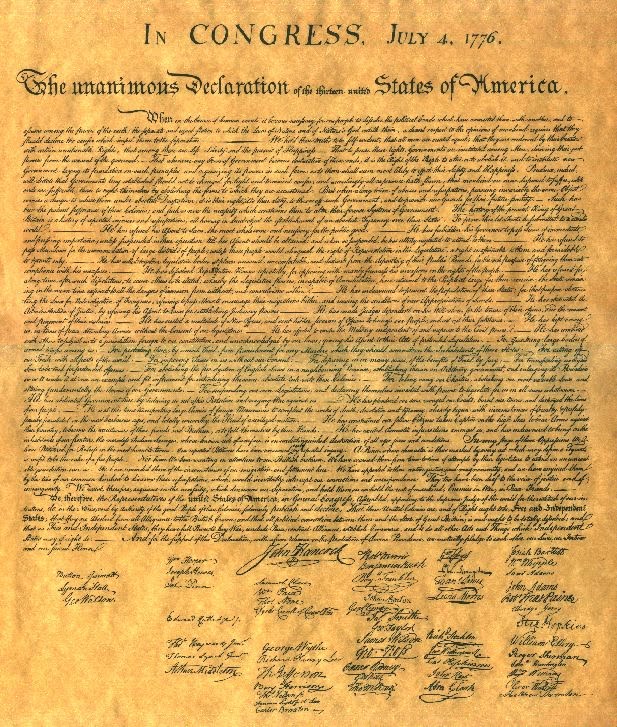
“But America must remain united.”  And so goes the knee jerk response to any declarations of state sovereignty, nullification, or independence.  Few understand that the “United States of America” was established on the foundation that people are “entitled” to separate themselves from their government when that government no longer fulfills its proper role.  So states Thomas Jefferson in the Declaration of Independence:

When in the Course of human events it becomes necessary for one people to dissolve the political bands which have connected them with another and to assume among the powers of the earth, the separate and equal station to which the Laws of Nature and of Nature’s God entitle them, a decent respect to the opinions of mankind requires that they should declare the causes which impel them to the separation.

After stating the purpose and proper role of government and how Britain had violated them repeatedly Jefferson continues to lay the cause of secession:

That whenever any Form of Government becomes destructive of these ends, it is the Right of the People to alter or to abolish it, and to institute new Government…(W)hen a long train of abuses and usurpations, pursuing invariably the same Object evinces a design to reduce them under absolute Despotism, it is their right, it is their duty, to throw off such Government, and to provide new Guards for their future security.

Source of Governmental Power—In answering questions of sovereignty it is important to recognize the source of man’s rights as well as the source of governmental power.  No one explained this more simply than Ezra Taft Benson in The Proper Role of Government:

Since God created man with certain unalienable rights, and man, in turn, created government to help secure and safeguard those rights, it follows that man is superior to the creature which he created. Man is superior to government and should remain master over it, not the other way around.

Leaving aside, for a moment, the question of the divine origin of rights, it is obvious that a government is nothing more or less than a relatively small group of citizens who have been hired, in a sense, by the rest of us to perform certain functions and discharge certain responsibilities which have been authorized. It stands to reason that the government itself has no innate power or privilege to do anything. Its only source of authority and power is from the people who have created it. This is made clear in the Preamble to the Constitution of the United States, which reads: “WE THE PEOPLE… do ordain and establish this Constitution for the United States of America.”

The important thing to keep in mind is that the people who have created their government can give to that government only such powers as they, themselves, have in the first place. Obviously, they cannot give that which they do not possess. So, the question boils down to this. What powers properly belong to each and every person in the absence of and prior to the establishment of any organized governmental form? A hypothetical question? Yes, indeed! But, it is a question which is vital to an understanding of the principles which underlie the proper function of government.

The fact that “man is superior to government” and should therefore remain “master over it” seems like an anachronistic idea to some.  Surely this idea has flipped since the creation of the Constitution.  The status-quo now teaches that government is the master and that our rights are derived from it.  Those who believe in state and personal sovereignty over the federal government are not in line with the status-quo.  They are often labeled as extreme, seditious rebels causing disunity.

Benson’s question, “What powers properly belong to each and every person in the absence of and prior to the establishment of government?” applies to state and personal sovereignty.  In the absence of government, does the power, or authority, for one party to force another party to remain under the same bands exist?  No!

Responsible Unity—An example of personal sovereignty could be illustrated by a marital contract.  Should the urge for unity supersede the right for others to separate themselves when they are being abused?  Should a woman continue an abusive marriage where the husband coerces her to abide under his drunken dominion…for the cause of unity?  Should she continue to support him and be loyal to him when he has repeatedly maxed out every credit card, betrayed her trust, broken his vows, and violated his side of the marital contract?  Common sense would require a person to answer these three questions, irrevocably—No!  How is this different in the national sense?  Since the states have entered into a contract with each other, aka the Constitution, shouldn’t either side have a right to divorce itself once the contract has been repeatedly violated?  Unity is ideal when all parties are being respected but to exalt unity at the expense of sovereignty is to rob people of their inalienable rights.  While giving his speech, Stand Up for Freedom, Ezra Taft Benson spoke of “irresponsible unity”.

Another recent development has been the call for national unity. I believe there needs to be a unity in our land. But it must not be blind, senseless, irresponsible unity. It should not be a unity just for the sake of unity. It needs to be a unity built on sound principles.

Speaking of the increasing political trend towards socialism Benson said:

If this has lead to disunity then by all means let us return to a program of sound Constitutional principles on which we can unite.

History has repeatedly taught us that our government continues to give little to no regard to uniting under Constitutional principles.  One might argue that the federal government has already seceded from the Constitution and therefore the people who wish to continue a Constitutional form of government aren’t actually advocating leaving the Republic but in restoring it.  From this perspective—who are the rebels?  Who are the law breakers?  Who are the extremists?  Who has caused disunity?

Joseph Smith recognized the importance of unity:

Unity is power; and when I reflect on the importance of it to the stability of all governments, I am astounded at the silly moves of persons and parties to foment discord in order to ride into power on the current of popular excitement. (Joseph Smith, Views of the Powers and Policy of the Government of the United States, 1844.)

But Joseph also recognized that obedience to unconstitutional laws is foolish after which he cites the 10th amendment (which specifically claims sovereignty to the states and people):

Shall we be such fools as to be governed by its laws, which are unconstitutional? No!…The Constitution acknowledges that the people have all power not reserved to itself.” (Joseph Smith, Latter-day Prophets and the United States Constitution)

Obeying, Honoring, and Sustaining the Law—Many Latter Day Saints will detest the notion of separation based on an isolated reading of their 12th Article of Faith:

We believe in being subject to kings, presidents, rulers, and magistrates, in obeying, honoring, and sustaining the law.

Few members are familiar with another scripture of theirs (D&C 134) which sheds light on the subject of the role and relationship of government with its people.  In the 5th verse we read:

We believe that all men are bound to sustain and uphold the respective governments in which they reside, while protected in their inherent and inalienable rights by the laws of such governments; and that sedition and rebellion are unbecoming every citizen thus protected

It is apparent that latter day saints believe “all men” are to uphold their governments only IF their governments are fulfilling their duty of protecting its people’s inalienable rights.

After studying the 12th Article of Faith and D&C 98 together, Latter Day Saint Americans should believe in obeying, honoring, and sustaining the law—the “Constitutional law of the land”:

And that law of the land which is constitutional, supporting that principle of freedom in maintaining rights and privileges, belongs to all mankind, and is justifiable before me. Therefore, I, the Lord, justify you, and your brethren of my church, in befriending that law which is the constitutional law of the land; And as pertaining to law of man, whatsoever is more or less than this, cometh of evil. (D&C 98:5-7)

The idea that our national government has repeatedly overstepped its Constitutional bounds should be accepted by millions of LDS American citizens.  Every President of the Church since Joseph Smith has warned of or pointed out violations of that sacred document.  What if elected officials at the national level are no longer obeying, honoring, and sustaining the law which they have sworn an oath to do?  Based on the above principles and scriptures—are LDS citizens required to remain subject to such a long train of abuses and usurpations?

Hypocrisy and Tyranny or Liberty and Sovereignty—Many Americans, both LDS and not, have accepted a hypocritical policy of pushing for foreign states to separate themselves from their oppressive central governments (i.e.- Georgia Vs Soviet Union) but have long-since attacked the same policy when it applies at home.  ‘Independence abroad but blind-unity at home’ is the motto of the pseudo-liberty-lover.  What was once a moral principle of sovereignty, which laid the foundation of this country, has been replaced by an idea that oppression must be permissible for the sake of unity.  Only the power-driven would spread such a lie and only an unprincipled ignoramus would accept it.

We the people are sovereign.  People are, or ought to be, masters over their government.  People have the responsibility to sustain their government when the government is protecting their inalienable rights; but when governments become destructive to those ends it is their right and it is their duty to separate themselves from such oppression.

These questions apply now: is your government fulfilling its role of protecting your inherent and inalienable rights?  If not, for how much longer will this be tolerable?
‘Ends Justify Means’ Fallacy

One of the biggest lies ever adopted as truth has been the philosophy that a good end is justified by any means necessary—good or bad.  Most people have good intentions and wish to obtain praiseworthy goals (ends) but some forget, ignore, or try to justify using immoral methods (means) to accomplish those goals.

In a letter to the Romans, Paul shed light on a false teaching attributed to him—“Let us do evil that good may come” (Romans 3:8).  Yet many Christians, even today, rationalize some degree of evil committed by themselves, governments, or others because of the “greater good” which supposedly came from their questionable methods.

The following is an excerpt from Elder F. Burton Howard’s talk “Repentance” which sheds more light on this false philosophy.

Just as foolish as believing that we can “pass it on” is the idea that the satisfaction of being in the circle, whatever that may be, can somehow excuse any wrongs committed there. This notion is widely shared and is most often expressed by the phrase, “The end justifies the means.” Such a belief, if left undisturbed and unchecked, can also impede the repentance process and cheat us out of exaltation.

Those who teach it are almost always attempting to excuse the use of improper or questionable means. Such people seem to be saying, “My purpose was to do good or to be happy; therefore, any little lie, or misrepresentation, or lapse of integrity, or violation of law along the way is justified.”

In certain circumstances, some say it is “okay” to conceal the truth, to dig just a small pit for an adversary, to pursue an advantage of some kind—such as superior knowledge or position—against another. “This is just common practice,” or “I’m just looking after Number One,” they say. “All’s fair in love and war,” or “That’s the way the ball bounces,” they say. But if the means which prompt the saying of these things are wrong, no amount of rationalization or verbal whitewash can ever make them right.

To those who believe otherwise, Nephi said: “Yea, and there shall be many which shall teach after this manner, false and vain and foolish doctrines, and shall be puffed up in their hearts, and shall seek deep to hide their counsels from the Lord.” (2 Ne. 28:9.)

Some seek to justify their actions by quoting scripture. They often cite Nephi’s killing of Laban as an example of the need to violate a law to accomplish a greater good and to prevent a nation from dwindling in unbelief. But they forget that Nephi twice refused to follow the promptings of the Spirit. In the end, he agreed to break the commandment only when he was convinced that “the Lord slayeth the wicked to bring forth his righteous purposes” (1 Ne. 4:13; italics added) and also (I believe) when he knew that the penalty for shedding blood had been lifted, in that one exceptional case, by Him whose right it is to fix and waive penalties.

The truth is that we are judged by the means we employ and not by the ends we may hope to obtain. It will do us little good at the last day to respond to the Great Judge, “I know I was not all I could have been, but my heart was in the right place.”

In fact, there is danger in focusing merely on ends. To some who did, the Savior said:

“Many will say to me in that day: Lord, Lord, have we not prophesied in thy name, and in thy name have cast out devils, and in thy name done many wonderful works? And then will I profess unto them: I never knew you; depart from me, ye that work iniquity.” (3 Ne. 14:22–23.)

The war in heaven was essentially about the means by which the plan of salvation would be implemented. It forever established the principle that even for the greatest of all ends, eternal life, the means are critical. It should be obvious to all thinking Latter-day Saints that the wrong means can never attain that objective.

The danger in thinking that the end justifies the means lies in making a judgment we have no right to make. Who are we to say that the Lord will pardon wickedness done to attain a perceived “greater good.” Even if the goal is good, it would be a personal calamity to look beyond the mark and fail to repent of the wrong we do along the way.

Consider a few more ‘ends justify the means’ arguments made throughout mankind’s history:

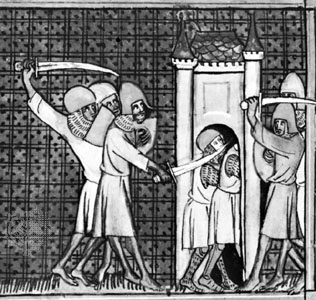
Crusades—it’s better to force people to accept Christianity than let them die unsaved.

Offensive War—it’s better to attack a potential enemy before they can attack you (Pre-emptive war) OR going to war is justied if it can save your nation’s economy.

Atomic Bomb—it’s better to kill 250,000 civilians than possibly lose 1,000,000 soldiers (intentional collateral damage).

Terrorism—it’s ok to kill innocent people to get a point across.

Torture—it’s better to use cruel methods to obtain information which can potentially save many others.

Socialism—it’s ok to forcefully take from Jane to pay for Mary’s schooling, medical bills, retirement, etc.  (it’s ok to steal from others if it’s for the ‘greater good’.)

Abortion—it’s better to abort an unwanted child than allow it to live in unfavorable conditions.

Prostitution & Drug Dealing—selling drugs or your body is ok if it’s a matter of survival.

Involuntary Vaccinations—forcing vaccinations on individuals is just in order to save everyone.

Our options between right and wrong often get distorted by how complicated the world gets.  Let’s not forget the chorus line from the Hymn “Do What Is Right”:

Do what is right; let the consequence follow.
Battle for freedom in spirit and might;
And with stout hearts look ye forth till tomorrow.
God will protect you; then do what is right!

Relative Extremism

Extremism is relative. Depending on where someone stands on any social, political, or cultural spectrum they’ll view anyone “too ideologically distant” as an extremist.  But this perspective has its shortcomings.

Many members of the LDS Church cling tightly to the teaching to be “moderate in all things” but confuse the phrase’s origin and proper applications.  This teaching is found nowhere in LDS canonized scripture, not even in D&C 89 where most members attribute the phrase to come from.  The teaching to be “moderate in all things” actually roots itself from Aristotle’s Doctrine of the Mean, which teaches that a virtue lies in the middle of two extremes.  The problem is that “extremes” shift at the whims of society but the gospel of Christ is a sure foundation and is immovable.  In the few cases where LDS prophets have used that term they were referring to living a balanced life- the balance, of course, being with the best things in life.  Being “moderate in all things” does not mean that people should approach all things, healthy and unhealthy, with moderation.

Many members use half-truths such as “moderation in all things” and “avoid extremes” to justify their viewpoints or to criticize others.  The truth is- being moderate in all things doesn’t mean that people should compromise, or shift to the middle of every controversy that exists in society.  Truth and righteousness are extreme notions to a society who love to follow Satan.  Outside of the Church society views the Church’s teachings as extreme. This isn’t justification for members to shift their standards to meet halfway with the world.  In every dispensation those who have preached the truth have been perceived as extremists.

Perhaps Noah should have met the Lord and the world half way and just built a canoe.  No one would have made fun of him or perceived him as an extremist.

Perhaps Jesus should have refrained from proclaiming himself as the Son of God and the Savior of the world.  After all, these proclamations were seen as extreme to most people at the time.

Perhaps Joseph Smith should have kept silent about his experiences with God and angels in order to avoid controversy.

Perhaps the Church should “get with the times” and start allowing homosexuals to marry in their temples.

Truth is not established on Gallup polls. –Ezra Taft Benson (An Enemy Hath Done This, pg 282)

If the path to salvation is straight and narrow then who are the real extremists?  The one’s clinging to the iron rod or the ones making fun of them (1 Ne 8)?  If someone really believed there is only one Lord, one faith, and one baptism (Ephesian 4:5) then wouldn’t an eternal perspective make them completely uninterested in the judgments of man?

…the world hath hated them, because they are not of the world, even as I am not of the world (John 17:14).

People take the moderate position because, to them, it’s safe.  It’s uncomfortable and embarrassing to be perceived as an extremist.  So rather than take a stand on moral ground they compromise their principles and values to accommodate the most amounts of people.  I suspect these could be some of the same cowards that Jesus said- because of being lukewarm, that He will spew them out of His mouth (Rev 3:16).

Moderation in all things is not a virtue, because it would seem to justify moderation in commitment. That is not moderation, but indifference. That kind of moderation runs counter to the divine commands to serve with all of our “heart, might, mind and strength” (D&C 4:2), to “seek … earnestly the riches of eternity” (D&C 68:31), and to be “valiant in the testimony of Jesus” (D&C 76:79). Moderation is not the answer. –Dallin H. Oaks (Our Strengths Can Become Our Downfall, Ensign, 1994)

The question boils down to this:  Who do you fear perceives you as an extremist?  Those who fear the world are obsessed with pleasing it through compromise and moderation.  Those who fear the Lord and act accordingly are not extremists to God.

For thou art an holy people unto the Lord thy God, and the Lord hath chosen thee to be a peculiar people unto himself, above all the nations that are upon the earth (Deut. 14:2).